



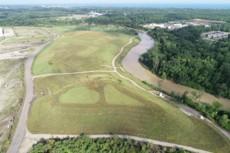
The U.S. Environmental Protection Agency, together with the Ohio Lake Erie Commission, Ohio EPA, and the Black River Community Advisory Council, removed the Degradation of Benthos beneficial use impairment on June 30, 2026. This BUI was the last of nine measures of environmental degradation assigned to the Black River Area of Concern in northeast Ohio.
Benthos are small organisms that live in the sediment at the bottom of lakes and rivers. Because they spend all or most of their life in the water and are sensitive to pollution, they are key indicators of water quality. Previously, the benthic community of the Black River had been impaired due to legacy pollutants from the area’s industrial past. This contributed to the river’s designation as a Great Lakes Area of Concern in 1987.
However, thanks to the restoration work conducted largely through the Great Lakes Restoration Initiative, the benthic community is recovering. Environmental monitoring following this work showed that benthic communities are not impaired in free-flowing sections of the Black River. In the Black River lacustuary (where river and lake water mix), the impairment was determined to be typical of region-wide conditions, rather than specific to the AOC.
Now that all BUIs have been removed, EPA and its partners have begun the process of delisting the AOC. EPA and partners anticipate this process will take approximately six to nine months to complete.
Ultimately, over 40 acres of upstream habitat, 10 acres of wetland habitat, and 3,000 linear feet of aquatic and riverbank habitat have been restored in the Black River, resulting in improved native plant and fish populations and significantly improved water quality. GLRI invested approximately $26 million in the AOC to make this recovery possible.
To learn more about the Black River AOC, visit EPA’s website: Black River AOC