



News by Topics - Michigan
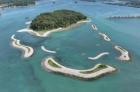
Revitalizing the Detroit River Ecosystem for Great Lakes Fisheries
NOAA, with help from partners across the Great Lakes Basin, is transforming the Detroit River to create important spawning and nursery habitat for native fish like the walleye, lake sturgeon, northern pike, and smallmouth bass. These restoration initiatives are improving the health of the river and making progress towards removing the Detroit River from the list of areas of concern.
May 20, 2025
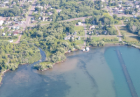
Ashland, Green Bay, Two Harbors, and Oscoda Township selected for engineering and design support through Great Lakes coastal resilience program
Projects will use nature-based solutions to address coastal hazards and support habitat and species goals prioritized by the Great Lakes Restoration InitiativeDecember 30, 2024

Final Remaining BUI, Degradation of Benthos, Removed at Muskegon Lake AOC
The last remaining BUI in the Michigan AOC, the Degradation of Benthos, was removed after federal, state, and local partners determined that measures of benthic community health met established criteria.December 12, 2024

The ultimate invader: USDA Wildlife Services works to minimize feral swine threats to the Great Lakes ecosystem
Feral swine are a highly destructive invasive species with populations that have expanded across the country, resulting in damage to a wide range of resource types. Wildlife biologists and field specialists from USDA Wildlife Services work to reduce feral swine damage by providing technical assistance and conducting targeted management activities in the field.December 3, 2024
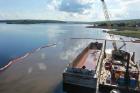
EPA completes Drum Removal Pilot Study in the Hubbell Processing Area of the Torch Lake Area of Concern
The U.S. Environmental Protection Agency completed a Drum Removal Pilot Study in the Hubbell Processing Area of the Torch Lake Area of Concern.November 13, 2024
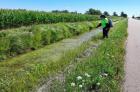
Forest Service Grant Supports Invasive Species Control In the Saginaw Bay Watershed
With Great Lakes Restoration Initiative funding provided by the USDA Forest Service, Saginaw Bay Cooperative Invasive Species Management Area established a two-person strike team to monitor and prioritize invasive plant species including phragmites, European frog-bit, and Japanese knotweed. The strike team monitored over 700 acres for invasive plants and treated over 250 acres to control phragmites, Japanese knotweed and European frog-bit population and spread.August 28, 2024
Further Recovery for The Freshwater Filter Feeding Saginaw Bay
A 10,000-acre national wildlife refuge in Michigan is the site of impressive GLRI-funded habitat restoration that reconnects rivers to floodplains. The U.S. Fish and Wildlife Service is partnering with researchers and biologists to study how aquatic species use this coastal ecosystem.May 3, 2024
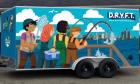
Casting lines and connecting lives: The Detroit River Youth Fishing Team
GLRI funds have enabled nearly 800 participants to participate in DRYFT, a U.S. Fish and Wildlife Service program based in Detroit, Michigan. By teaching youth to fish, this nature-focused experiential project will create opportunities to learn about local environments while developing lifelong outdoor skills.April 26, 2024
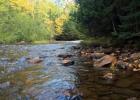
Community Forest Project connects vital river habitat in northern Michigan
A 226-acre parcel of pristine waterfront land in Michigan’s Upper Peninsula has been conserved through USDA Forest Service’s Community Forest program.
March 18, 2024
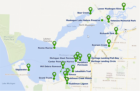
Loss of Fish and Wildlife Habitat and Degradation of Fish and Wildlife Populations BUIs removed at Muskegon Lake AOC
After implementing an extensive shoreline and wetland habitat restoration plan in Muskegon Lake and portions of its tributaries, the Loss of Fish and Wildlife Habitat and Degradation of Fish and Wildlife Populations Beneficial Use Impairments have been removed from the Muskegon Lake Area of Concern. There are two remaining BUIs in this AOC.
June 14, 2023